
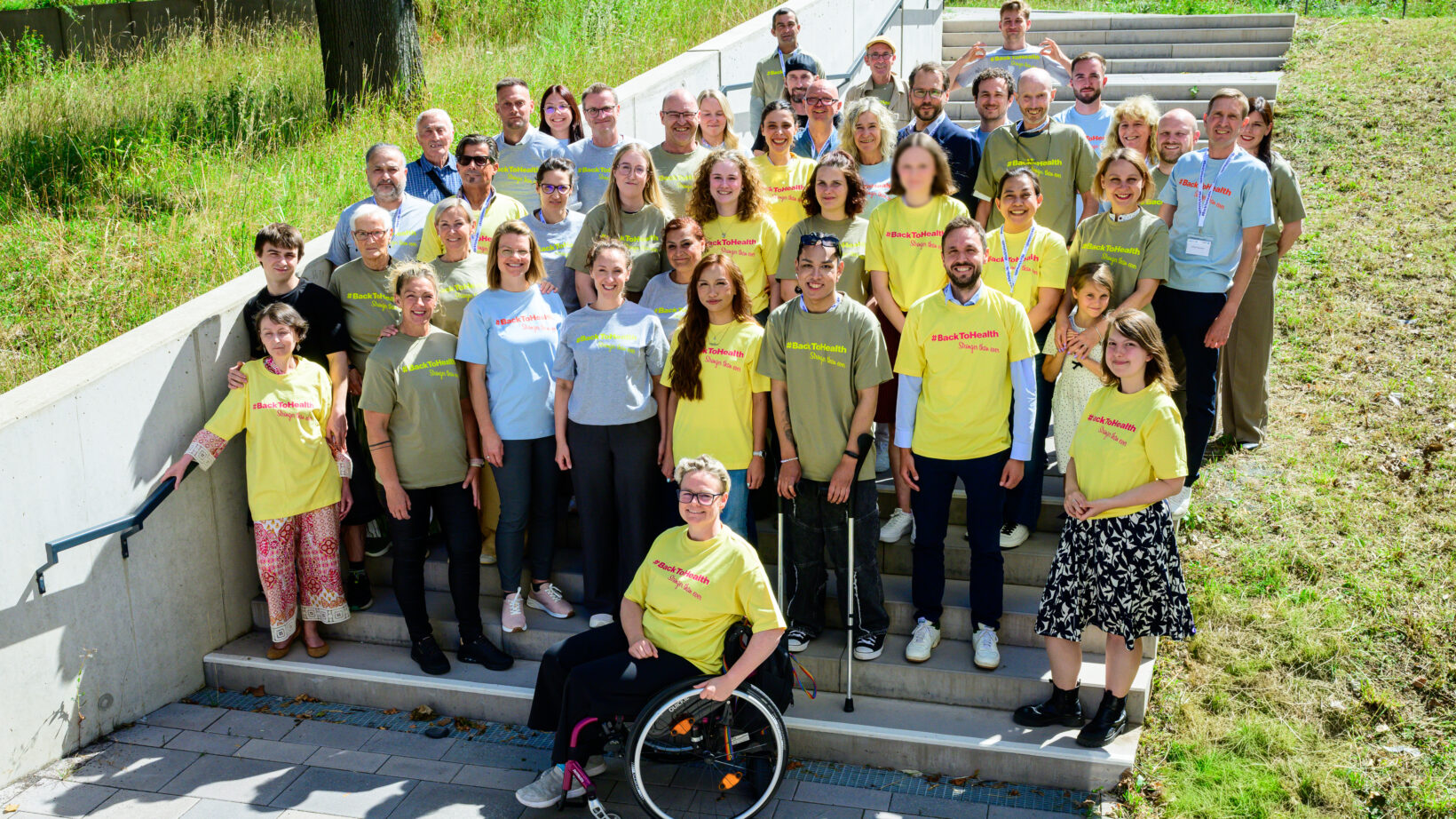
Fifth Annual CAR T-Cell Meeting Brings Patients and Treatment Team Together Under the Motto #BackToHealth
For the fifth time, the German Center for Immunotherapy (DZI) at Universitätsklinikum Erlangen brought together patients with autoimmune diseases who had received CAR T-cell therapy and their interdisciplinary treatment team. Many of them have regained an important part of their life after therapy. Under the motto #BackToHealth, personal stories, recent developments, and open dialogue between patients and the medical team were at the heart of this special afternoon.
For many participants, autoimmune diseases su
ch as systemic lupus erythematosus, systemic sclerosis, idiopathic myositis, or ulcerative colitis have shaped their daily lives for years. These diseases can significantly impair quality of life and, in severe cases, be life-threatening.
CAR-T cell therapy specifically targets dysregulated immune cells. The goal is to permanently interrupt disease-causing immune responses and enable long-term remission.
Some autoimmune diseases develop early in childhood or adolescence. In Erlangen, several adolescents have now been successfully treated with CAR-T cells. Another important step forward is the use of this therapy for a severe, treatment-resistant form of ulcerative colitis: In Erlangen, young adults with this chronic inflammatory bowel disease (ulcerative colitis) were treated with CAR-T cells for the first time worldwide, with promising results.
New Perspectives for Young Patients
Autoimmune diseases such as systemic lupus erythematosus often affect young women at a stage in life when starting a family may be an important consideration. Both the disease itself and the immunosuppressive therapies required to treat it can make pregnancy difficult or, at times, impossible.
An international study led by Prof. Georg Schett, Director of the Department of Medicine 3 – Rheumatology and Immunology at Universitätsklinikum Erlangen, FAU Erlangen-Nürnberg, examined pregnancies following CAR T-cell therapy for autoimmune diseases. The pregnancies reported so far have been free of major complications. There is also encouraging news from Erlangen: Three former patients have become mothers following their treatment and have given birth to healthy children.
New Approaches to Patient Communication
Innovative treatment approaches require clear and patient-centered communication. In Erlangen, immersive virtual reality applications such as “CARSLE VR – Fighting Lupus”, as well as mobile formats, are being used to make complex disease mechanisms and treatment processes easier to understand. The aim is to enhance understanding and support patients in making informed and autonomous decisions.
The impact of these formats is being scientifically evaluated in a controlled intervention study comparing them with conventional patient education approaches.
European Networking and the Patient Perspective
Exchange and collaboration around CAR T-cell therapy for autoimmune diseases are also growing beyond Erlangen. This year’s Patient Day welcomed Anna Fryxelius, Chief Advisor at the Norwegian Rheumatism Association (NRF) and active in the European patient advocacy network EULAR PARE. Her visit provided an opportunity to connect with patients in Erlangen and the treatment team, strengthening the exchange of patient perspectives across Europe.
She was particularly impressed by meeting the patients in person and hearing their stories. She also shared the story of a young lupus patient from Norway who, just six months after CAR T-cell therapy, was able to return to his work and his dream of being a full-time fisherman.
Stories like these highlight the importance of dialogue and stronger European collaboration among patients, patient organizations, researchers, and healthcare professionals.